
IT Operations & Cybersecurity Encyclopedia
Cybersecurity Policy Starter Set Guide
Build a policy library that employees can understand, managers can own, IT can enforce, and auditors can verify. This field guide turns broad security intentions into a prioritized starter set with control owners, evidence sources, exception rules, review triggers, and practical validation tests.
12-policy starter library
Policy-to-control mapping
Evidence and validation
Exceptions and reapproval

One ownerEvery policy has an accountable business owner and an operational custodian.
One control mapEvery mandatory statement connects to a standard, procedure, or technical control.
One evidence pathEvery important requirement identifies where proof is produced and retained.
One review clockEvery document has scheduled and event-driven review triggers.
Operating purpose
A policy is useful only when it changes real decisions
A cybersecurity policy states management’s mandatory expectations. It should tell people what outcome is required, who is accountable, which users, systems, data, locations, and third parties are in scope, and how exceptions are governed. It should not attempt to contain every technical setting or every click in an administrator workflow.
The operational detail belongs in standards and procedures that can change without forcing executive reapproval of the entire policy. Evidence then shows whether the organization follows what it approved. This separation keeps executive governance stable while allowing IT and security teams to maintain current configurations.
Practical approval rule: Do not approve a policy if an owner cannot identify its enforcement point, authoritative evidence source, exception path, and test for failure.
Document architecture
Keep policy, standards, procedures, guidance, and evidence distinct
A short hierarchy prevents one oversized document from becoming outdated, contradictory, or impossible to use.
Policy
Management intent and mandatory outcome. Defines purpose, scope, roles, required behavior, enforcement authority, exceptions, approval, and review cadence.
Standard
Measurable minimum baseline. Specifies requirements such as MFA coverage, encryption methods, patch timeframes, logging retention, backup tiers, and approved configurations.
Procedure
Repeatable operating steps. Explains how staff provision access, review alerts, approve changes, restore backups, report incidents, or offboard a user.
Guideline
Recommended practice where judgment is allowed. Provides examples and decision support without quietly weakening a mandatory requirement.
Evidence
Records that prove design and operation. Includes settings exports, tickets, logs, test results, acknowledgements, approvals, exceptions, metrics, and revalidation results.
Prioritized policy library
A practical 12-policy cybersecurity starter set
A small or midsize business does not need dozens of overlapping documents on day one. Start with the policies that govern the highest-impact access, data, technology, and resilience decisions. Add environment-specific documents only when scope, regulation, customer commitments, technology, or risk warrants them.
| Priority | Policy | Decisions it must govern | Typical owner | Representative evidence |
|---|---|---|---|---|
| Start now | Information security governance and risk | Risk tolerance, roles, authority, policy hierarchy, reporting, control oversight, exceptions, and review cadence. | Executive sponsor / CISO | Approved charter, risk register, policy inventory, meeting decisions, exception register, and review calendar. |
| Start now | Acceptable use and workforce security | Business use, prohibited actions, approved software, removable media, privacy expectations, reporting duties, and acknowledgement. | HR + IT | Signed acknowledgements, training completion, device rules, software controls, and violation workflow. |
| Start now | Identity and access control | Joiner-mover-leaver process, MFA, passwords, privileged access, service accounts, shared accounts, reviews, and emergency access. | IT / identity owner | Identity inventory, MFA coverage, access tickets, termination samples, privileged reviews, and reset logs. |
| Start now | Data classification and handling | Classification, approved storage, sharing, encryption, retention, deletion, printing, transmission, and sensitive-data incidents. | Data owners + legal/privacy | Data inventory, labels, sharing settings, retention configuration, disposal records, and approved application list. |
| Start now | Backup, recovery, and continuity | Protected systems, recovery objectives, backup separation, retention, monitoring, restore testing, crisis roles, and recovery priorities. | Business continuity + IT | Backup job history, immutable-copy settings, restore tests, dependency map, recovery exercise, and corrective actions. |
| Start now | Incident response and reporting | Reporting channels, severity, authority, containment, evidence preservation, communications, legal escalation, and lessons learned. | Incident lead / executive sponsor | Contact tree, incident tickets, timeline, evidence log, tabletop results, notification decisions, and after-action report. |
| Build next | Asset, configuration, and change management | Authoritative inventory, ownership, secure baselines, approved change, emergency change, lifecycle, and decommissioning. | IT operations | Asset inventory, baseline records, change tickets, approval history, configuration drift, and disposal certificates. |
| Build next | Vulnerability and patch management | Discovery, severity, remediation timeframes, exposed assets, unsupported systems, verification, exceptions, and reporting. | IT / security operations | Scan coverage, patch reports, remediation tickets, exception approvals, exposure list, and rescans. |
| Build next | Remote access, mobile, and BYOD | Approved devices, enrollment, VPN or zero-trust access, local storage, support boundaries, lost-device response, and offboarding. | IT + HR | Device compliance, enrollment inventory, conditional access, remote-access logs, wipe tests, and user acknowledgement. |
| Build next | Third-party and vendor access | Due diligence, contractual requirements, sponsor, least privilege, remote support, monitoring, expiration, incident notice, and termination. | Vendor owner + procurement | Vendor inventory, assessment, contract clauses, accounts, access logs, sponsor attestations, and closure records. |
| By environment | Logging, monitoring, and alert response | Required sources, time synchronization, retention, access, use cases, alert ownership, escalation, privacy, and health monitoring. | Security / IT operations | Source inventory, retention settings, alert tickets, tuning decisions, ingestion health, and escalation records. |
| By environment | Secure technology acquisition and cloud use | Approved architecture, security review, data location, identity integration, vendor risk, configuration, ownership, and exit plan. | Technology owner + procurement | Architecture review, risk decision, approved-service register, tenant settings, data-flow record, and offboarding plan. |
Scoping note: Healthcare, financial, defense, public-sector, payment-card, and other regulated environments may require additional policy content. Contractual obligations, cyber-insurance conditions, customer commitments, union rules, privacy requirements, and local law should be reviewed by qualified stakeholders.
Control-contract method
Give every mandatory statement enough structure to be enforced
Treat each important policy requirement as a control contract between management, the business owner, the operator, and the evidence reviewer.
Objective and riskState the outcome and the loss scenario it is intended to reduce.
Scope and boundaryName covered users, systems, data, locations, vendors, and exclusions.
Mandatory ruleUse clear “must” language for requirements and avoid vague qualifiers.
AccountabilityName the policy owner, control operator, approver, and evidence reviewer.
Implementation sourceLink the approved standard, procedure, configuration baseline, or contract clause.
Evidence sourceName the authoritative system, record, collection window, and retention period.
Failure and escalationDefine pass criteria, failure threshold, notification path, and remediation timeframe.
Exception and reviewDefine approval authority, compensating control, expiration, revalidation, and review trigger.
Page-specific implementation workflow
Build, approve, operate, and maintain the starter set
1
Map obligations and risk
Identify legal, contractual, insurance, customer, operational, and risk-management requirements. Record conflicts and interpretation owners.
2
Inventory the operating environment
Map identities, applications, endpoints, servers, networks, cloud services, data classes, vendors, locations, and current controls.
3
Choose the minimum library
Select the policies that govern actual exposure. Do not copy a large library simply because a template contains it.
4
Write control contracts
For each mandatory statement, define scope, owner, enforcement point, evidence source, failure criteria, and exception path.
5
Challenge operational fit
Have IT, HR, legal, privacy, procurement, data owners, and business leaders confirm the rule matches real systems and responsibilities.
6
Approve and communicate
Capture version, approver, effective date, audience, acknowledgement or training requirements, and authoritative publication location.
7
Test design and operation
Sample records, execute control tests, document failures, assign corrective work, and retain revalidation evidence.
8
Review events and drift
Monitor changes, incidents, audit findings, exceptions, metrics, regulations, business processes, and technology for review triggers.
Evidence integrity
Design the evidence path before the policy is approved
Evidence should come from an authoritative source and show both control design and control operation. A settings screenshot may show that a rule exists; a representative event, ticket, or test result shows whether the rule worked. Evidence created only for an audit is weaker than records produced by routine operations.
Artifact and sourceName the export, log, ticket, report, approval, acknowledgement, configuration, or test result and its authoritative system.
Owner and collection windowRecord who collected it, the period represented, the population, the sample method, the collection date, and time zone.
Expected and observed resultState the policy requirement, the test or query performed, the actual result, and the pass or failure decision.
Integrity and retentionProtect evidence from unauthorized change, restrict access, preserve timestamps, and apply the approved retention schedule.
Exception, remediation, and revalidationLink deviations to an owner, risk decision, compensating control, due date, corrective ticket, and final retest.
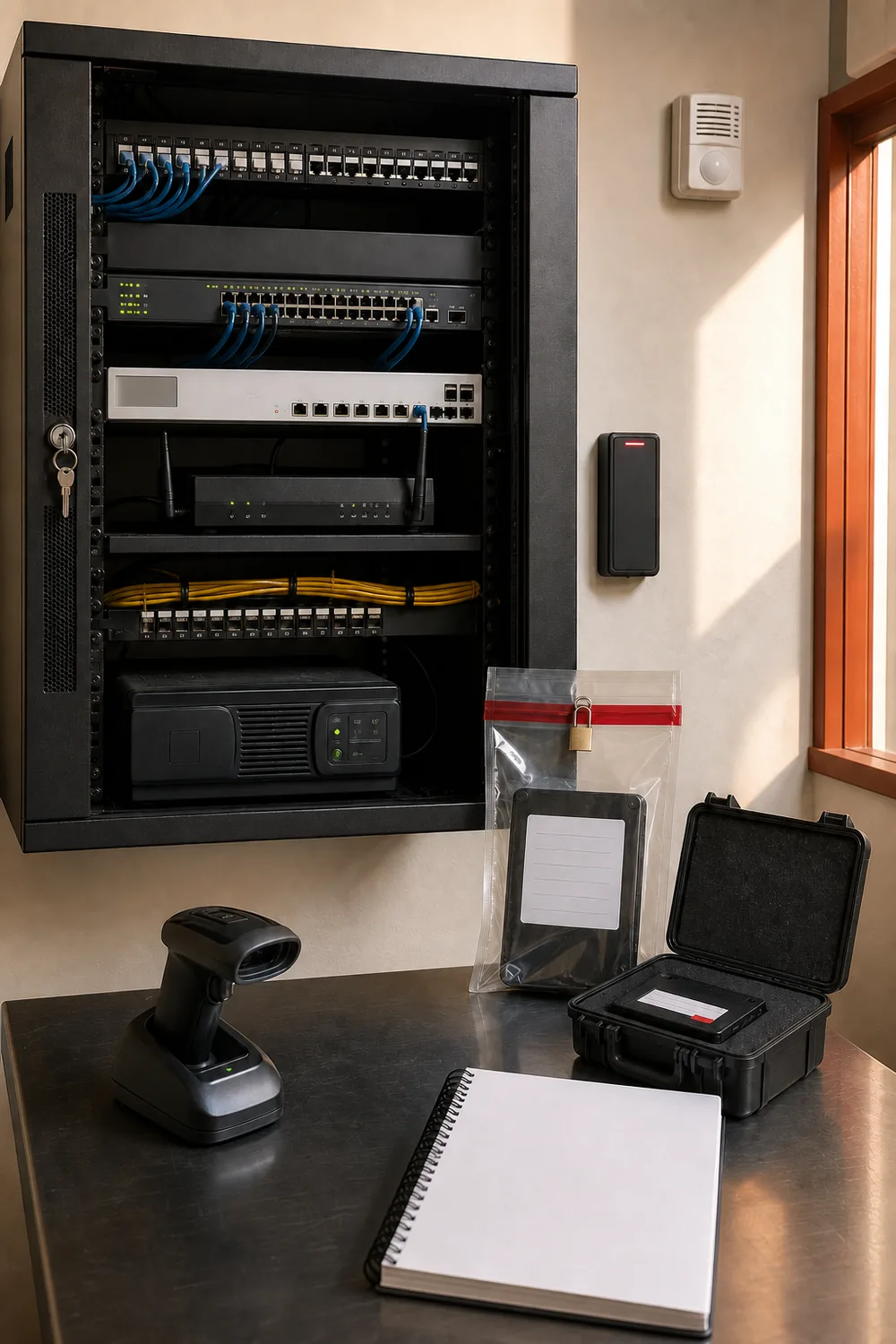
Evidence record
Minimum fields for a defensible policy-control test
| Field | What to capture | Why it matters | Common defect |
|---|---|---|---|
| Requirement ID | Policy, section, control statement, related standard, and effective version. | Prevents testing the wrong or obsolete requirement. | Evidence cannot be traced to an approved statement. |
| Population and scope | Covered systems, users, vendors, data, locations, and known exclusions. | Shows whether testing represents the full control boundary. | A clean sample hides an untested or excluded population. |
| Authoritative source | System of record, query or export method, time zone, collection window, and collector. | Supports reproducibility and evidence integrity. | Manual spreadsheet has no verifiable source lineage. |
| Expected result | Exact pass condition, threshold, frequency, tolerance, and escalation trigger. | Makes the control measurable before results are known. | Reviewer decides what “good” means after seeing the data. |
| Observed result | Result, exceptions, affected assets or identities, screenshots or export, and reviewer conclusion. | Separates evidence from interpretation. | Only a summary statement is retained. |
| Corrective action | Owner, ticket, priority, due date, compensating control, risk acceptance, and dependency. | Converts a finding into accountable work. | Issue remains open with no owner or date. |
| Revalidation | Retest date, method, result, reviewer, closure approval, and retained artifacts. | Proves that remediation corrected the failure. | Ticket closure is treated as proof without a retest. |
Control validation
Sample tests that turn policy into evidence
Select tests based on risk and system scope. The goal is not a ceremonial annual review; it is proof that the requirement works under normal and adverse conditions.
Termination access test
Sample separated workers and vendors. Compare HR or sponsor termination time with identity disablement, session revocation, device return, mailbox handling, VPN removal, and application closure.
Pass: every in-scope access path is closed within the approved timeframe.MFA coverage test
Compare the authoritative user and privileged-account population with MFA registration, enforcement, exclusions, legacy protocols, emergency accounts, and high-risk application coverage.
Pass: exclusions are approved, narrow, monitored, and time-bounded.Restore and recovery test
Select a critical workload and restore from the protected copy into an isolated location. Validate data integrity, dependencies, credentials, recovery time, evidence, and corrective actions.
Pass: the service is recoverable within approved objectives.Patch and exposure test
Reconcile vulnerability findings, endpoint coverage, internet-facing assets, patch deployment, unsupported systems, remediation tickets, exceptions, and verification scans.
Pass: required assets meet the approved remediation window or carry current exception approval.Vendor access expiry test
Sample vendor identities, remote tools, service accounts, firewall rules, sponsor approvals, contract end dates, last use, monitoring, and offboarding records.
Pass: access remains necessary, least-privileged, monitored, and owned.Incident contact drill
Exercise a credible scenario. Verify reporting channels, after-hours contacts, decision authority, legal or insurance escalation, evidence preservation, communications, and executive updates.
Pass: participants can act without searching for missing authority or contacts.Logging continuity test
Verify critical log sources, time synchronization, ingestion health, retention, access restrictions, alert routing, and a representative investigation query across the required period.
Pass: expected events are searchable, timestamped, protected, and routed.Data-sharing test
Sample sensitive records and review storage, permissions, external sharing, encryption, retention, approved applications, data owner, and deletion or legal-hold requirements.
Pass: handling matches the approved classification and business purpose.Policy acknowledgement test
Reconcile the required audience with publication, training, acknowledgement, role changes, contractors, leave status, overdue users, and follow-up records.
Pass: the full required population receives and understands its obligations.Governed deviations
Exceptions are temporary risk decisions, not silent permission
An exception should identify the exact policy requirement and affected scope, explain why the requirement cannot be met, assess the threat and business impact, document compensating controls, name the risk owner, set an expiration date, and define monitoring and revalidation. Approval authority should match the possible business impact.
Required exception record
- Policy and requirement ID
- Affected identities, assets, data, locations, or vendor
- Business rationale and technical constraint
- Threat, likelihood, impact, and residual risk
- Compensating controls and monitoring owner
- Approver, effective date, expiration, and review date
- Remediation plan, dependency, due date, and revalidation test
Reject or escalate when
- The scope is undefined or broader than necessary.
- No accountable business risk owner accepts the residual risk.
- The exception bypasses a critical control with no compensating safeguard.
- The request has no expiration date or is repeatedly renewed without a remediation plan.
- Monitoring cannot detect misuse or control failure.
- The exception conflicts with law, contract, safety, privacy, or customer obligations.
- The change would expose emergency, privileged, backup, identity, or security-management systems without additional review.
Scheduled reviewReview each policy at least on its approved schedule; high-risk control standards and exceptions may need more frequent review.
Technology changeReview after cloud migration, identity redesign, acquisition, new application, network change, remote-work shift, or outsourcing.
Risk signalReview after incident, near miss, material vulnerability, control failure, threat-intelligence change, audit finding, or repeated help desk pattern.
Business obligationReview after regulatory, contractual, customer, insurance, privacy, legal, ownership, or geographic change.
Blocking quality defects
Failure criteria for a cybersecurity policy program
Template fiction
The document describes controls, tools, owners, or processes that the organization does not have and cannot evidence.
No named accountability
The policy says “the organization” or “IT” is responsible without an accountable owner, operator, approver, or reviewer.
Vague mandatory language
Terms such as “where appropriate,” “regularly,” or “securely” appear without a decision owner, measurable standard, or defined frequency.
Policy-control conflict
The approved statement does not match identity, endpoint, firewall, cloud, backup, logging, HR, vendor, or ticketing configuration.
Evidence without lineage
Reports or screenshots do not identify the source, population, collection window, expected result, owner, or reviewer.
Silent exceptions
Legacy systems, executives, vendors, service accounts, emergency access, or operational technology bypass the rule without approval or expiration.
Approval without communication
Employees, contractors, support staff, managers, and vendors do not receive the rules or role-specific procedures they must follow.
Review without testing
An owner changes the review date but does not sample evidence, test operation, examine incidents, or reconcile technology changes.
Closure without revalidation
A remediation ticket is marked complete even though nobody repeats the failed test or confirms the affected population is corrected.
Related guidance and services
Continue from governance into implementation
Related IT Perfection guidance
Move from document to operating control
Build a policy starter set that matches your environment
Start with the policies that govern your highest-impact decisions, connect them to enforceable standards and procedures, and prove operation through routine evidence and revalidation.
Frequently asked questions
Cybersecurity policy starter set FAQ
Which cybersecurity policies should a small business create first?
Start with governance and risk, acceptable use, identity and access control, data handling, backup and recovery, and incident response. Then add asset and change management, vulnerability and patch management, remote access or BYOD, vendor access, logging, and secure technology acquisition based on the operating environment.
What is the difference between a policy and a procedure?
A policy states management’s mandatory outcome, scope, accountability, and authority. A standard defines measurable minimum requirements. A procedure explains the repeatable steps used to meet the requirement. Keeping these layers separate lets technical procedures change without weakening or repeatedly rewriting executive policy.
How long should a cybersecurity policy be?
Long enough to define purpose, scope, mandatory requirements, roles, enforcement, exceptions, approval, and review triggers, but short enough for the intended audience to use. Detailed settings, tool instructions, and operational sequences belong in linked standards and procedures.
How often should cybersecurity policies be reviewed?
Use an approved schedule and event-driven triggers. Review after material incidents, control failures, technology or business changes, new legal or contractual obligations, audit findings, acquisitions, vendor changes, and significant shifts in threat or risk. Control standards and exceptions may require more frequent review than the parent policy.
What evidence proves a cybersecurity policy is working?
Use evidence tied to the requirement and authoritative source: configuration exports, logs, tickets, access reviews, training records, backup and restore results, alert cases, vendor records, exception approvals, remediation tickets, and revalidation tests. Record the population, collection window, expected result, observed result, owner, and reviewer.
Can a business use policy templates?
A template can accelerate structure, but it must be rewritten to match the organization’s systems, data, people, vendors, obligations, risks, control owners, evidence sources, and exception authority. Publishing statements that the business does not implement creates operational, audit, contractual, and credibility risk.
This guide is for initial education and planning. It does not replace a professional cybersecurity audit, compliance assessment, penetration test, legal or regulatory review, privacy review, insurance interpretation, or vendor engineering engagement.
