IPsec
IPsec protects network-layer traffic with encryption, integrity checking, and security associations between VPN peers.
Hotline: +1 949 777 5567
Email: Info@ITperfection.com
IT Operations & Cybersecurity Encyclopedia
Site-to-site VPNs connect business locations, data centers, partner networks, and cloud environments through encrypted tunnels. When they are designed and monitored properly, they support reliable multi-site operations. When they are misconfigured, they can become a quiet path for outages, lateral movement, and weak visibility.
What Is Site-to-Site VPN
A site-to-site VPN builds an encrypted tunnel between gateway devices, such as firewalls, routers, VPN concentrators, or cloud VPN gateways. Users normally do not launch a VPN client. Their traffic is routed through the tunnel based on network routes, firewall policies, security associations, and business application needs.
Common use cases include connecting headquarters to branch offices, linking manufacturing or warehouse sites, connecting on-premises networks to Azure or AWS, providing partner connectivity, and supporting multi-site file, voice, camera, identity, and application services.

IPsec and IKE
IPsec protects network-layer traffic with encryption, integrity checking, and security associations between VPN peers.
Internet Key Exchange negotiates authentication, encryption proposals, keys, lifetimes, and tunnel parameters. IKEv2 is preferred in many modern designs.
Administrators must align peer identity, encryption, hash/integrity, Diffie-Hellman groups, lifetimes, local networks, and remote networks.
Routing and Firewall Policies
Site-to-site VPN designs may use static routes, route-based VPNs, policy-based VPNs, BGP, hub-and-spoke routing, cloud transit gateways, or SD-WAN overlays. Each route should be documented, limited to business need, and tested during failover.
Firewall rules should be least privilege. Avoid allowing every subnet to every subnet. Define source, destination, service, logging, inspection, and business owner for cross-site access.
Split tunnel and asymmetric designs can bypass inspection, logging, DNS filtering, DLP, or SIEM visibility if they are not intentionally designed. Review return paths, NAT, route priority, and cloud route tables.
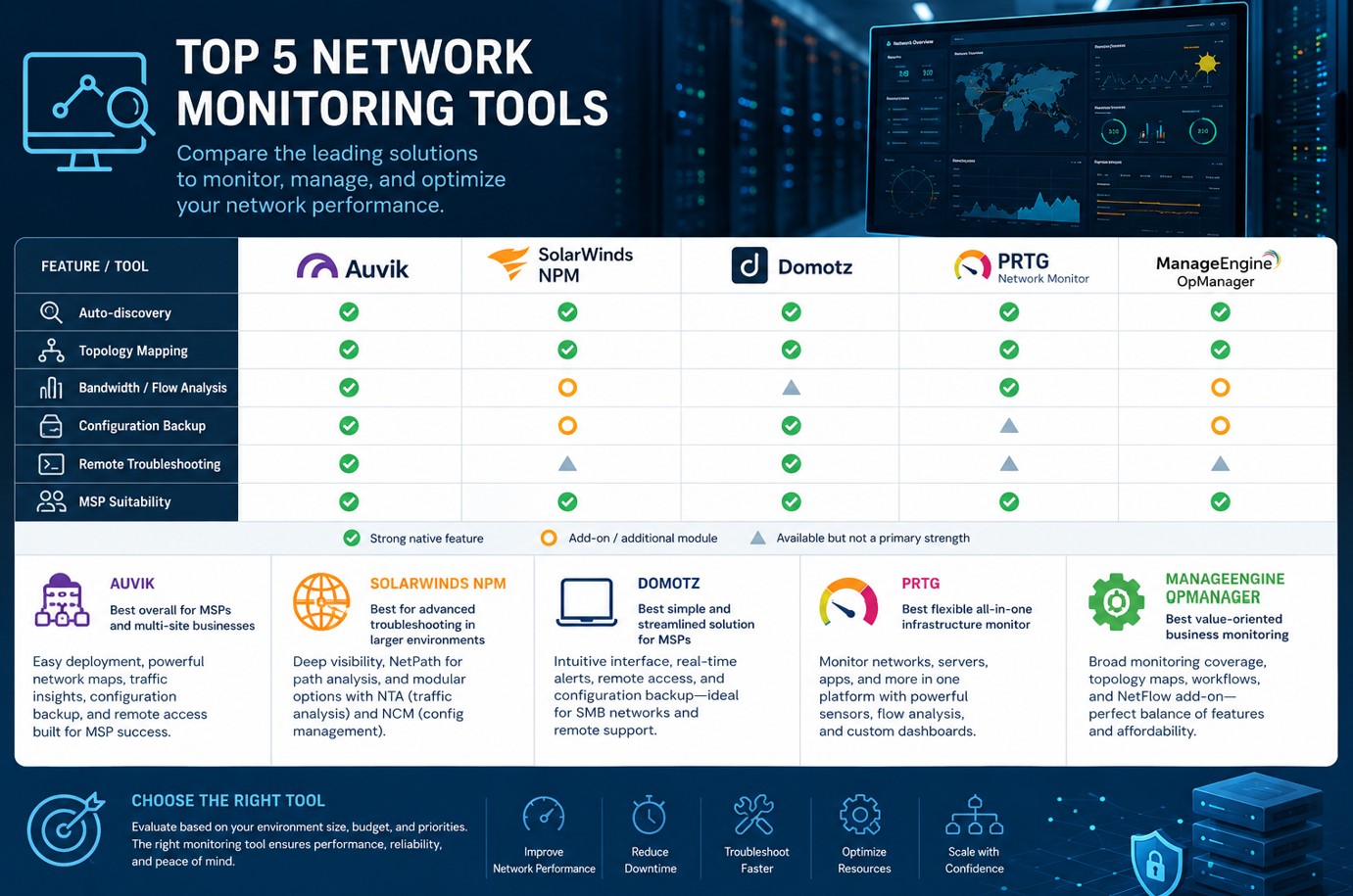
Business-critical tunnels should have monitoring, redundant peers where appropriate, secondary ISP paths, cloud gateway redundancy, and tested failback procedures.
Encryption and Authentication
| Area | Good Practice | Administrator Note |
|---|---|---|
| Encryption | Use modern, vendor-supported proposals such as AES-GCM or AES-256 where appropriate. | Disable deprecated ciphers and weak hashes after compatibility review. |
| Key exchange | Use strong Diffie-Hellman groups or elliptic-curve groups supported by both peers. | Align proposals across both VPN endpoints and document accepted settings. |
| Pre-shared keys | Use unique, long, random keys per tunnel and rotate them on a schedule. | Do not reuse one shared secret across locations, vendors, and cloud connections. |
| Certificates | Use certificate authentication where scale, security, or governance requires stronger identity. | Track issuance, expiration, revocation, and renewal procedures. |
| Logging | Log negotiations, failures, rekeys, tunnel up/down events, and denied cross-site traffic. | Forward logs to SIEM or log analytics where possible. |
Highlighted Guidance
Secure site-to-site VPN architecture requires more than turning on encryption. It should combine strong cryptography, trusted authentication, least-privilege routing, firewall rule control, operational monitoring, patching, and security analytics.
Authoritative references: Fortinet documentation, Cisco VPN documentation, SonicWall documentation, Palo Alto Networks IPsec VPN documentation, Meraki site-to-site VPN documentation, WatchGuard BOVPN documentation, Azure VPN Gateway documentation, AWS Site-to-Site VPN documentation, CISA enterprise VPN security, NIST SP 800-77 IPsec VPN guidance, MITRE ATT&CK External Remote Services, MITRE ATT&CK Protocol Tunneling, and NVD vulnerability database.
Vulnerabilities and Misconfiguration Risks
Business Impact
Maintenance Checklist
Related Internal Links

Ali Hassani, CISO
Ali Hassani, CISO, has 25+ years of experience in IT infrastructure, cybersecurity, network security, Microsoft environments, compliance-focused IT operations, firewall security, VPN design, and business IT leadership.
Ali helps businesses review site-to-site VPN design, firewall policies, cloud VPN routes, monitoring, logging, failover, and documentation so multi-site connectivity is easier to operate and safer to audit.
CISSP, CCISO, CCNP, CCNA, MCSE, MCSA Security, MCITP, MCP, MCTS.



FAQ
A site-to-site VPN is an encrypted network tunnel that connects two or more business networks, such as headquarters, branch offices, data centers, and cloud networks.
Yes. IPsec with IKEv2 is widely used for site-to-site VPNs across firewalls, routers, cloud VPN gateways, and enterprise network platforms.
Certificates usually scale better and reduce shared-secret risk, but they require certificate lifecycle management. Pre-shared keys can be acceptable for smaller designs when they are strong, unique, protected, and rotated.
Monitor tunnel status, packet loss, latency, tunnel flaps, authentication failures, rejected traffic, route changes, failover events, and unusual cross-site traffic.
No. This guide is for initial guidance only and does not replace a professional cybersecurity audit, compliance assessment, penetration test, or legal/compliance review.
Need help securing VPN tunnels, reviewing IPsec settings, cleaning up firewall policies, designing cloud VPN connectivity, or building multi-site failover? IT Perfection can help.
Created by Ali Hassani, CISO – 25+ years of IT, cybersecurity, compliance, and infrastructure experience.